How to Create Instagram Templates That Save Time
Creating fresh, engaging content for Instagram day after day can be a major time drain. For social media managers, agencies, and brands, the pressure to maintain a consistent and visually appealing feed is immense. This is where Instagram templates come in as a game-changing solution. They are the secret to working smarter, not harder.
This guide will walk you through how to create Instagram templates that not only save you significant time but also ensure your brand's identity remains strong and cohesive across all your posts.
Table of Contents
- What Are Instagram Templates and Why Do They Matter?
- The Benefits of Using Instagram Templates
- A Step-by-Step Guide to Creating Your Templates
- Streamlining Your DM Workflow with Text Templates
- Conclusion
What Are Instagram Templates and Why Do They Matter?
Instagram templates are pre-designed layouts that you can customize for your posts, Stories, and Reels. Think of them as a blueprint for your content. They typically include your brand's colors, fonts, logo, and other visual elements, providing a consistent framework that you can easily adapt for different types of content.
They matter because they are the foundation of a strong and recognizable brand presence on Instagram. A cohesive feed is more than just aesthetically pleasing; it communicates professionalism and reliability, which can be the deciding factor for a potential follower or customer.
The Benefits of Using Instagram Templates
- Saves Time and Boosts Efficiency: This is the biggest benefit. Instead of starting from scratch for every post, you have a ready-made layout. This allows you to batch-create content and focus your energy on strategy and engagement.
- Ensures Brand Consistency: Templates ensure that every piece of content aligns with your brand's visual identity, creating a cohesive and professional-looking feed.
- Improves Content Quality: With a solid design foundation, you can focus on the quality of the content itself, rather than worrying about the design of each post.
- Simplifies Collaboration: If you work with a team, templates ensure that everyone is on the same page and adhering to the brand guidelines.
A Step-by-Step Guide to Creating Your Templates
Step 1: Define Your Brand's Visual Identity
Before you create any templates, you need a clear brand style guide. This should include:
- Color Palette: Your primary and secondary brand colors.
- Typography: The specific fonts you use for headings and body text.
- Logo Usage: Guidelines on how and where to use your logo.
- Iconography: A consistent style for any icons or graphics you use.
Step 2: Choose Your Design Tools
You don't need to be a professional designer to create beautiful templates. There are many user-friendly tools available:
- Canva: A popular choice with thousands of customizable templates.
- Adobe Express (formerly Adobe Spark): Another excellent tool for creating professional graphics with ease.
- Figma or Sketch: For those with more design experience, these tools offer greater flexibility.
Step 3: Design Your Post Templates
Create a set of templates for your different content pillars. For example, you might have templates for:
- Quote Graphics: A simple background with your brand's font.
- Tip Posts: A layout designed to present a list of tips, perhaps for a carousel post.
- Promotional Posts: A template to showcase a product or announce a sale.
- Testimonials: A design to highlight customer reviews.
Step 4: Create Your Story Templates
Your Stories should also feel on-brand. Create templates for:
- Announcements: A simple template to share news or updates.
- Q&As and Polls: A branded background for your interactive stickers.
- Behind-the-Scenes: A template with a consistent frame or filter.
Step 5: Don't Forget Reel Covers and Text Templates
- Reel Covers: To maintain a cohesive grid, create branded cover images for your Reels.
- Caption Templates: You can also create templates for your captions. For example, a structure that includes a hook, the main body, and a call-to-action can be saved and adapted for different posts.
Streamlining Your DM Workflow with Text Templates
Your brand's voice should be consistent not only in your public-facing content but also in your private conversations. As your account grows, you'll receive more Direct Messages (DMs) with common questions about your products, services, or business hours. Typing out the same response repeatedly is a huge time-waster.
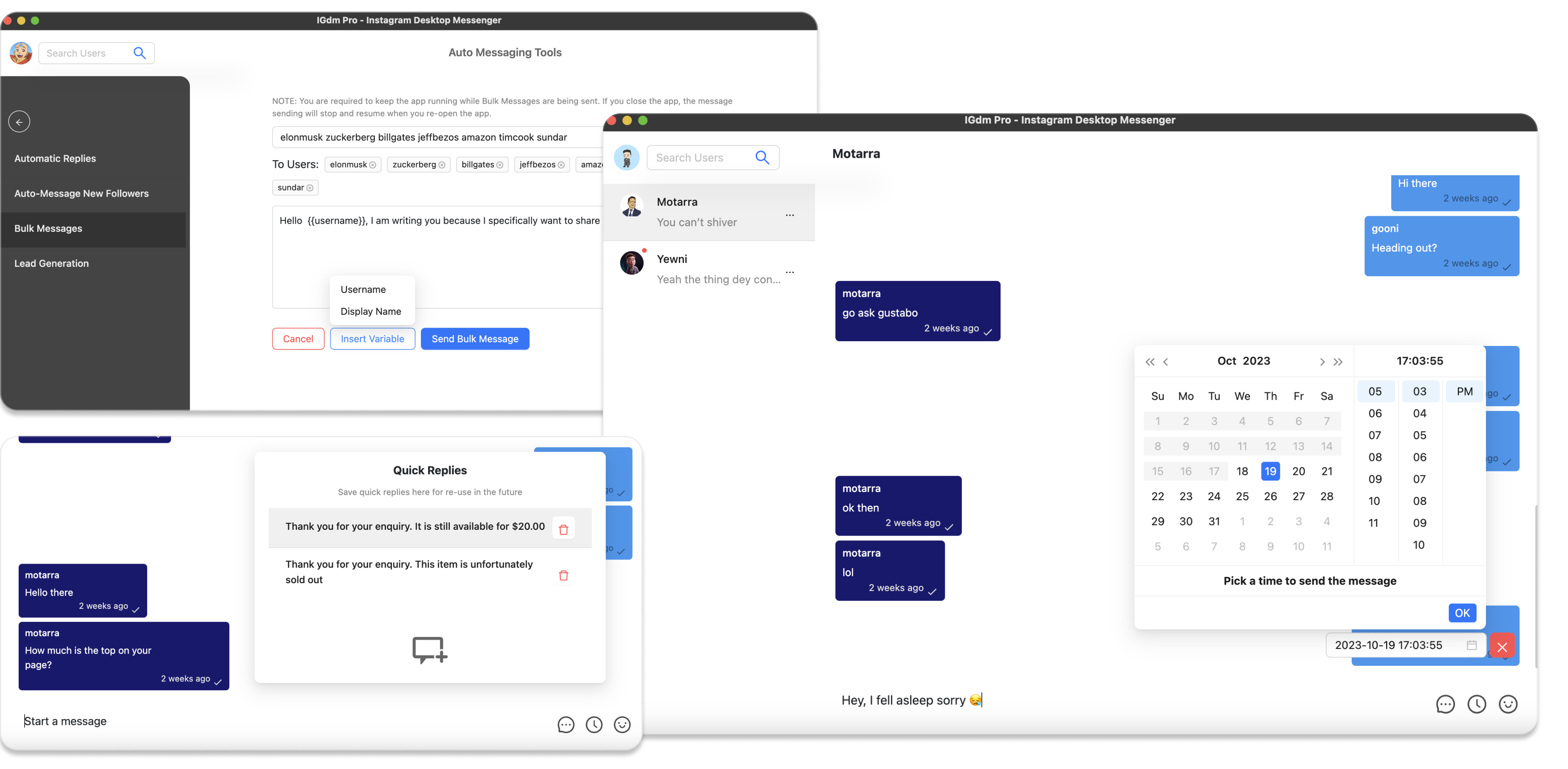
This is where text templates for your DMs become invaluable. A powerful desktop tool like IGdm Pro can help you manage this with its Quick Replies feature. You can save pre-written responses for your most frequently asked questions and insert them into your conversations with a single click.
With IGdm Pro, you can create templates for:
- Welcoming new followers.
- Answering FAQs about shipping, pricing, or services.
- Following up on leads.
- Thanking customers for their purchase.
By using a tool like IGdm Pro to manage your DM templates, you ensure that every interaction is prompt, professional, and perfectly on-brand, which is crucial for building strong customer relationships.
Conclusion
Instagram templates are a must-have for any brand serious about building a strong, consistent, and efficient presence on the platform. By investing a little time upfront to create a set of templates, you can save countless hours in the long run, all while elevating the quality and cohesiveness of your content.
From your feed posts and Stories to your DM responses, templates provide a framework that allows you to focus on what truly matters: creating valuable content and engaging with your community. So, start designing, and watch your Instagram presence transform.