How to A/B Test Instagram Ads Effectively
Running Instagram ads can feel like a high-stakes guessing game. You create a stunning visual, write compelling copy, and hit "publish," hoping for the best. But what if you could take the guesswork out of it? What if you could use data to create ads that are scientifically proven to resonate with your audience and drive results? This is the power of A/B testing.
This comprehensive guide will walk you through how to A/B test your Instagram ads effectively. We'll cover what to test, how to set up your tests, and how to analyze the results to continuously improve your campaigns and maximize your return on investment (ROI).
Table of Contents
- What is A/B Testing and Why Does it Matter?
- The Key Elements to A/B Test in Your Instagram Ads
- How to Set Up an A/B Test in Meta Ads Manager
- Best Practices for Reliable A/B Testing
- Analyzing Your Results to Find the Winner
- A/B Testing "Send Message" Campaigns and Managing DMs
- Conclusion: From Guesswork to Growth
What is A/B Testing and Why Does it Matter?
A/B testing, also known as split testing, is a method of comparing two versions of an ad to see which one performs better. By changing a single variable—like the headline, the image, or the target audience—you can gather data on what resonates most with your audience.
Why is this so important?
- Maximize Your ROI: A/B testing helps you identify the most effective combination of creative and targeting, ensuring you get the most out of every dollar you spend.
- Understand Your Audience: It provides concrete data on what your audience responds to, offering deep insights into their preferences and behaviors.
- Improve Ad Performance: Continuous testing and optimization lead to better-performing ads, lower costs, and higher conversion rates.
The Key Elements to A/B Test in Your Instagram Ads
You can test almost every element of your Instagram ad. Here are the most impactful variables to start with:
1. Ad Creative
- Visuals: Test different images or videos. Does a lifestyle photo perform better than a product shot? Does a short, punchy Reel outperform a polished video?
- Ad Format: Compare a single image ad to a carousel ad, or a video ad to a collection ad.
2. Ad Copy
- Headline: The first line of your copy is your hook. Test different opening questions or statements.
- Body Copy: Try different lengths (short vs. long), tones (professional vs. conversational), and benefit highlights.
- Call-to-Action (CTA): Test different CTA button text, like "Shop Now" vs. "Learn More."
3. Audience
- Interests: Test different interest-based targeting groups.
- Custom Audiences: Compare the performance of a warm audience (like website visitors) to a cold audience.
- Lookalike Audiences: Test different percentages of Lookalike Audiences (e.g., 1% vs. 5%).
4. Placement
- Compare the performance of your ad in the Instagram Feed vs. Stories vs. Reels.
How to Set Up an A/B Test in Meta Ads Manager
Meta Ads Manager has a built-in A/B testing feature that makes the process straightforward.
- Create a Campaign: In Ads Manager, create a new campaign and choose your objective.
- Turn on A/B Test: At the campaign level, you'll see a toggle to "Create A/B Test." Turn it on.
- Choose Your Variable: Ads Manager will prompt you to select the variable you want to test (e.g., Creative, Audience, Placement).
- Create Your Variations: You'll then be guided to create your two ad sets (Ad Set A and Ad Set B), each with the different version of the variable you're testing. For example, if you're testing the audience, you'll set up two different audiences.
- Set Budget and Schedule: Determine your budget and how long you want the test to run.
Ads Manager will then split your budget evenly between the two variations and gather data to determine a winner.
Best Practices for Reliable A/B Testing
- Test One Variable at a Time: This is the golden rule. If you change both the headline and the image, you won't know which change was responsible for the difference in performance.
- Have a Clear Hypothesis: Before you start, have a clear idea of what you expect to happen (e.g., "I believe a video ad will have a higher click-through rate than an image ad").
- Use a Sufficient Budget and Timeframe: Your test needs to run long enough and with enough budget to gather statistically significant data.
- Trust the Data: Don't end a test early just because you have a gut feeling. Let it run its course to get reliable results.
Analyzing Your Results to Find the Winner
Once your test is complete, Ads Manager will typically declare a winning version based on your campaign objective. Look at the key metrics:
- Cost Per Result: This is often the most important metric. Which ad generated the results you wanted (e.g., purchases, leads) for the lowest cost?
- Click-Through Rate (CTR): Which ad was more effective at getting users to click?
- Return on Ad Spend (ROAS): For e-commerce brands, which ad generated the most revenue for every dollar spent?
Use these insights to inform your future ad campaigns, continuously iterating and improving on what works.
A/B Testing "Send Message" Campaigns and Managing DMs
A "Send Message" CTA can be a powerful way to start conversations and generate high-quality leads. When you're A/B testing this type of campaign, a key metric for success will be the number and quality of the conversations initiated.
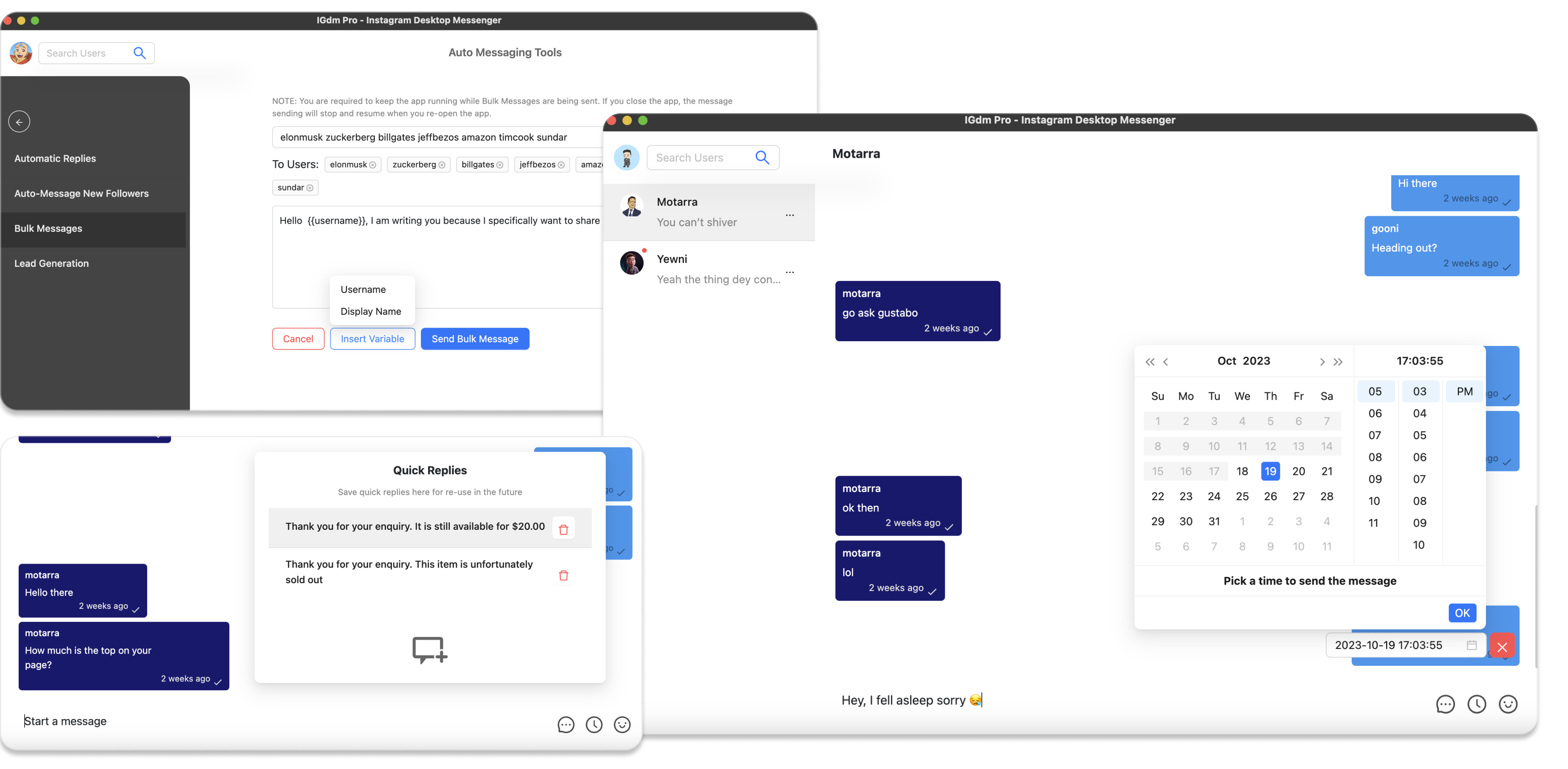
However, a successful ad can lead to a flood of DMs. Managing these inquiries promptly and professionally is crucial for converting this interest into sales. This is where a powerful DM management tool like IGdm Pro becomes an essential part of your testing workflow.
With IGdm Pro, you can:
- Set Up Auto-Replies: When a user messages you from an ad, you can use Automatic Replies to instantly deliver the information they're looking for or to acknowledge their message. This provides a seamless user experience and allows you to track which ad variation is generating more qualified inquiries.
- Organize and Qualify Leads: Use Labeled Conversations to categorize incoming DMs based on the ad they came from (e.g.,
Ad A Lead,Ad B Lead). This helps you easily compare the lead quality from each version of your A/B test. - Respond Faster with Quick Replies: Create templates for common questions to handle a high volume of DMs with speed and consistency.
By integrating a tool like IGdm Pro, you can efficiently manage the leads your A/B tests generate, providing you with a clearer picture of which ad is truly driving the most valuable business results.
Conclusion: From Guesswork to Growth
A/B testing transforms your Instagram advertising from a game of chance into a data-driven strategy for growth. By systematically testing different elements of your ads, you can unlock powerful insights about your audience, optimize your campaigns for maximum ROI, and build a more effective and profitable advertising machine.
Start small, test one variable at a time, and let the data guide your decisions. With a commitment to continuous improvement, you'll be well on your way to mastering the art of Instagram advertising.