How to Collaborate With Micro-Influencers for Client Campaigns
Table of Contents
- Introduction: The Micro-Influencer Advantage
- Why Micro-Influencers are a Game-Changer for Your Clients
- Step 1: Define Clear Campaign Goals
- Step 2: Find the Right Micro-Influencers
- Step 3: Vet Your Potential Partners
- Step 4: Master Your Outreach
- Step 5: Structure the Collaboration
- Step 6: Measure Your Campaign's Success
- Conclusion: Building Long-Term Partnerships
Introduction: The Micro-Influencer Advantage
In the world of Instagram marketing, bigger isn't always better. While mega-influencers have massive reach, micro-influencers—creators with a smaller, more dedicated following—often deliver higher engagement and a more authentic connection with their audience. For marketing agencies and social media managers, learning how to effectively collaborate with micro-influencers can be a game-changing strategy for their clients.
This guide will walk you through a comprehensive, step-by-step process for finding, vetting, and managing micro-influencer collaborations that drive real results. We'll also explore how leveraging smart tools can streamline your workflow, making your campaigns more efficient and impactful.
Why Micro-Influencers are a Game-Changer for Your Clients
Micro-influencers, typically defined as having between 10,000 and 100,000 followers, offer several unique advantages for client campaigns:
- Higher Engagement Rates: They often have a more personal relationship with their followers, leading to higher engagement rates compared to macro-influencers.
- Niche Expertise and Trust: Micro-influencers are often seen as experts in their specific niche. Their recommendations are perceived as more authentic and trustworthy.
- Cost-Effectiveness: Collaborating with micro-influencers is generally more affordable, allowing you to work with multiple influencers for the same budget as one larger creator, thus diversifying your reach.
- Targeted Audience: Their followers are typically highly interested in the influencer's niche, giving you direct access to a pre-qualified and relevant audience for your client.
Step 1: Define Clear Campaign Goals
Before you start searching for influencers, you need to know what you want to achieve for your client. Clear goals will guide your entire strategy, from the type of influencer you choose to the metrics you track. Common goals for an influencer campaign include:
- Brand Awareness: Increasing the client's visibility and reach.
- Lead Generation: Driving sign-ups, inquiries, or other lead-capturing actions.
- Sales and Conversions: Directly boosting product sales.
- Community Growth: Increasing the client's follower count and building an engaged community.
Step 2: Find the Right Micro-Influencers
Finding influencers who genuinely align with your client's brand is crucial for an authentic collaboration.
- Hashtag Research: Search for niche-specific hashtags related to your client's industry.
- Analyze Competitor's Followers: Look at who is following and engaging with your client's competitors.
- Check Your Client's Existing Followers: Your client's biggest fans are often right under their nose. Look for followers who are already posting about the brand.
Streamlining Your Search with Automation
Manually searching for influencers can be time-consuming. A powerful tool like IGdm Pro can help you accelerate this process. With its Lead Generation features, you can:
- Extract Follower Lists: Quickly export the follower lists of competitor accounts or other key players in your client's niche.
- Analyze Post Engagers: Extract lists of users who have liked or commented on specific posts. This is a great way to find highly engaged individuals who might be perfect micro-influencer partners.
By automating the data extraction, you can build a targeted list of potential influencers to vet, saving you hours of manual work.
Step 3: Vet Your Potential Partners
Once you have a list of potential influencers, it's time to do your due diligence.
- Check for Authentic Engagement: Look beyond the follower count. Are the comments genuine and conversational, or are they generic and spammy? A high number of comments from real people is a good sign.
- Analyze Audience Demographics: Ask the influencer for a screenshot of their audience demographics from their Instagram Insights. Ensure their audience aligns with your client's target customer.
- Review Past Collaborations: Look at their previous sponsored posts. Do they align with your client's brand values? Is the content high-quality and authentic?
Step 4: Master Your Outreach
Your first message to a potential influencer is your pitch. Make it count.
- Personalize Your Message: Avoid generic, copy-paste messages. Address the influencer by name and mention a specific post or aspect of their content that you admire.
- Be Clear and Concise: Clearly state who you are, the brand you represent, and why you think a collaboration would be a good fit.
- Outline the Value Proposition: Explain what's in it for them. Is it a paid collaboration, a free product, or a long-term partnership?
Scaling Your Outreach Efficiently
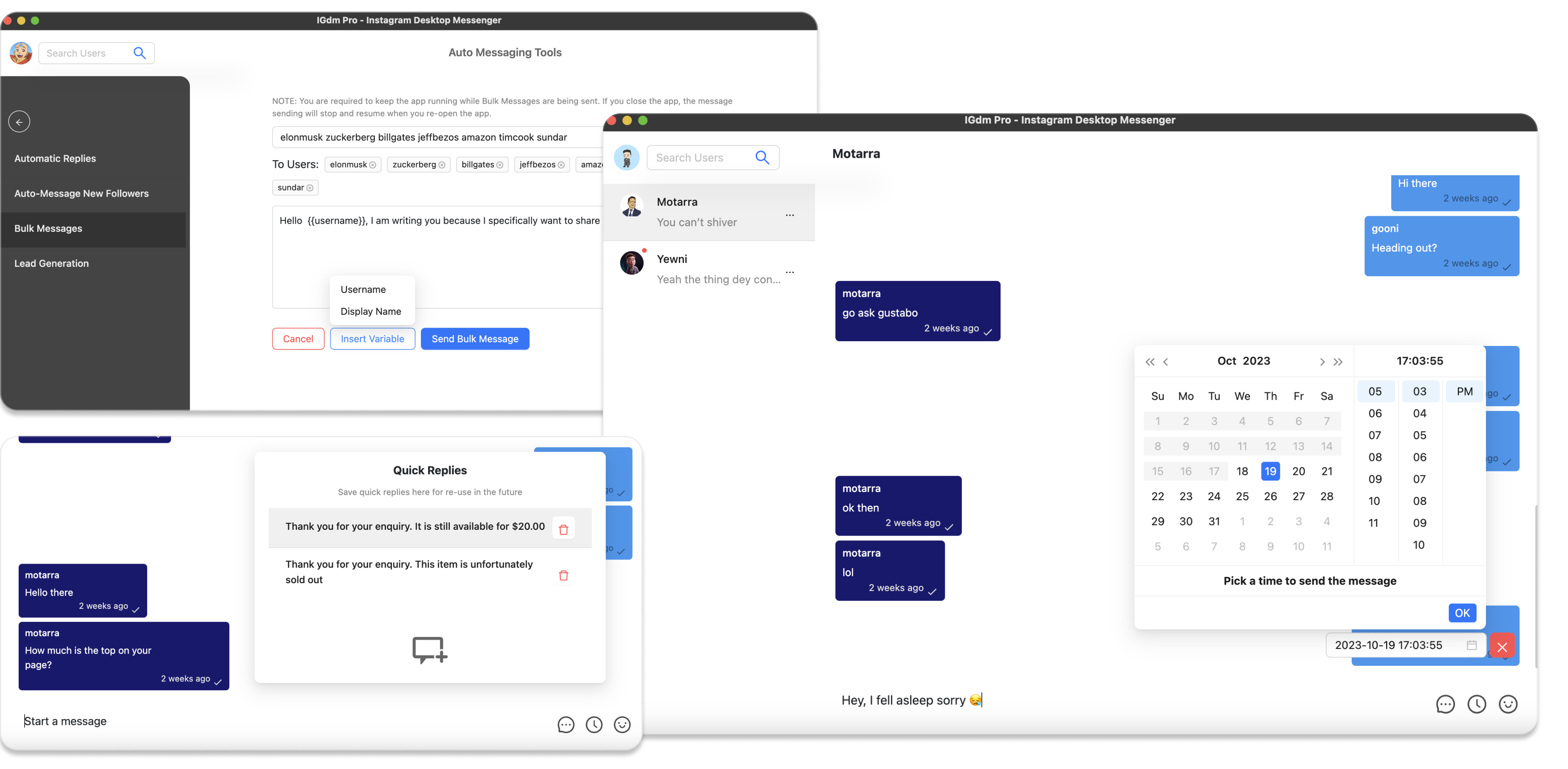
When reaching out to multiple influencers, a tool like IGdm Pro can streamline your workflow.
- Bulk Messaging: Use the Bulk Messaging feature to send personalized DMs to your vetted list of influencers. With variables like
{{name}}, you can maintain a personal touch even at scale. - Quick Replies: Save your outreach pitch as a template to respond quickly to interested influencers.
Step 5: Structure the Collaboration
Once an influencer agrees to collaborate, it's time to formalize the partnership.
- Create a Detailed Brief: Provide a clear campaign brief that outlines the goals, key messages, deliverables (e.g., 1 Reel, 3 Stories), and any important do's and don'ts.
- Give Creative Freedom: While the brief should provide direction, it's important to give the influencer creative freedom to produce content that will resonate with their audience.
- Sign a Contract: A simple contract that outlines the deliverables, timeline, compensation, and content usage rights is essential to protect both your agency and the influencer.
Step 6: Measure Your Campaign's Success
After the campaign is live, you need to track its performance against the goals you set in Step 1.
- Track Key Metrics: Monitor engagement rate, reach, impressions, and website clicks.
- Use Unique Discount Codes or UTM Links: To track sales and conversions, provide each influencer with a unique discount code or a trackable UTM link.
- Report to Your Client: Compile the results into a comprehensive report that clearly demonstrates the ROI of the campaign.
Conclusion: Building Long-Term Partnerships
Collaborating with micro-influencers is a powerful way to build authentic connections and drive real results for your clients. By following a strategic framework for finding, vetting, and managing these partnerships, you can create campaigns that are both effective and efficient.
Remember to leverage tools that can streamline your workflow. A well-managed DM inbox is crucial for maintaining professional communication with multiple influencers, and a tool like IGdm Pro can be an invaluable asset in your agency's toolkit. With its powerful automation and organizational features, you can manage your influencer campaigns with the professionalism and scale that your clients expect.