How to Deal With Instagram Trolls and Negative Comments
The comment section of your Instagram profile is a double-edged sword. It can be a vibrant space for community, praise, and valuable feedback. But it can also attract negativity, from spam and trolls to genuine customer complaints. How you handle these comments is a critical part of your brand's reputation management. A well-handled negative comment can build trust, while a poorly managed one can escalate into a PR crisis.
This guide will walk you through the essential strategies for dealing with Instagram trolls and negative comments, helping you protect your brand's image and foster a more positive community.
Table of Contents
- The Different Types of Negative Comments
- Strategy 1: Dealing with Trolls and Spam
- Strategy 2: Responding to Genuine Negative Feedback
- Strategy 3: Turning a Negative into a Positive
- Streamlining Your Response with DM Automation
- Conclusion: Building a Resilient Community
The Different Types of Negative Comments
Not all negativity is created equal. The first step is to identify what kind of comment you're dealing with:
- Spam: Irrelevant comments, often promotional, that have nothing to do with your content.
- Trolls: Comments designed to provoke, harass, or upset you or your community. They are not interested in a productive conversation.
- Genuine Criticism: Legitimate complaints or negative feedback from customers or followers who have had a bad experience or hold a differing opinion.
Your response strategy will be different for each of these categories.
Strategy 1: Dealing with Trolls and Spam
The golden rule for dealing with trolls is simple: don't feed the trolls. Engaging with them often fuels their behavior and gives them the attention they crave. Here's how to handle them effectively using Instagram's built-in tools:
- Delete the Comment: The quickest way to remove a hateful or offensive comment.
- Restrict the User: This is a powerful tool. When you restrict someone, their comments on your posts will only be visible to them. You won't receive a notification, and you can choose to approve the comment to make it public, delete it, or ignore it. It's a way to neutralize a troll without them knowing they've been muted.
- Block the User: For persistent trolls or clear-cut cases of harassment, blocking is the best option. This will prevent them from seeing your content or interacting with your account.
- Use Comment Filters: In your settings (
Settings > Privacy > Hidden Words), you can set up filters to automatically hide comments that contain specific offensive words or phrases.
For spam comments, the best course of action is to simply delete them and block the user to prevent future spam.
Strategy 2: Responding to Genuine Negative Feedback
Genuine criticism, while sometimes hard to read, is an opportunity. It's a chance to demonstrate your brand's commitment to customer satisfaction and turn a negative experience into a positive one.
The Acknowledge, Align, and Act Framework
-
Acknowledge the Comment Publicly: Your first response should be a prompt, public reply to the comment. This shows your other followers that you are responsive and take feedback seriously.
- Acknowledge their frustration: "We're so sorry to hear you had this experience."
- Thank them for their feedback: "Thanks for bringing this to our attention."
-
Align by Taking the Conversation Private: The public comment section is not the place to hash out the details of a customer's issue. Your public reply should always aim to move the conversation to Direct Messages (DMs).
- "We want to make this right. We've just sent you a DM to get some more details."
- "So sorry about this! Could you please send us a DM with your order number so we can look into it for you?"
-
Act in the DMs: Once in the DMs, you can resolve the issue privately and professionally. Listen to their concerns, be empathetic, and offer a solution.
Strategy 3: Turning a Negative into a Positive
How you handle criticism can be a powerful form of social proof. When other followers see you responding to negative feedback with grace and a genuine desire to help, it builds trust and reinforces your brand's credibility. A well-handled complaint can often turn a frustrated customer into a loyal advocate.
Streamlining Your Response with DM Automation
When a negative comment requires a shift to DMs, speed is crucial. But manually responding to every comment and then crafting a follow-up DM is not scalable, especially during a crisis or for accounts with high engagement. This is where a DM automation tool can be a game-changer.
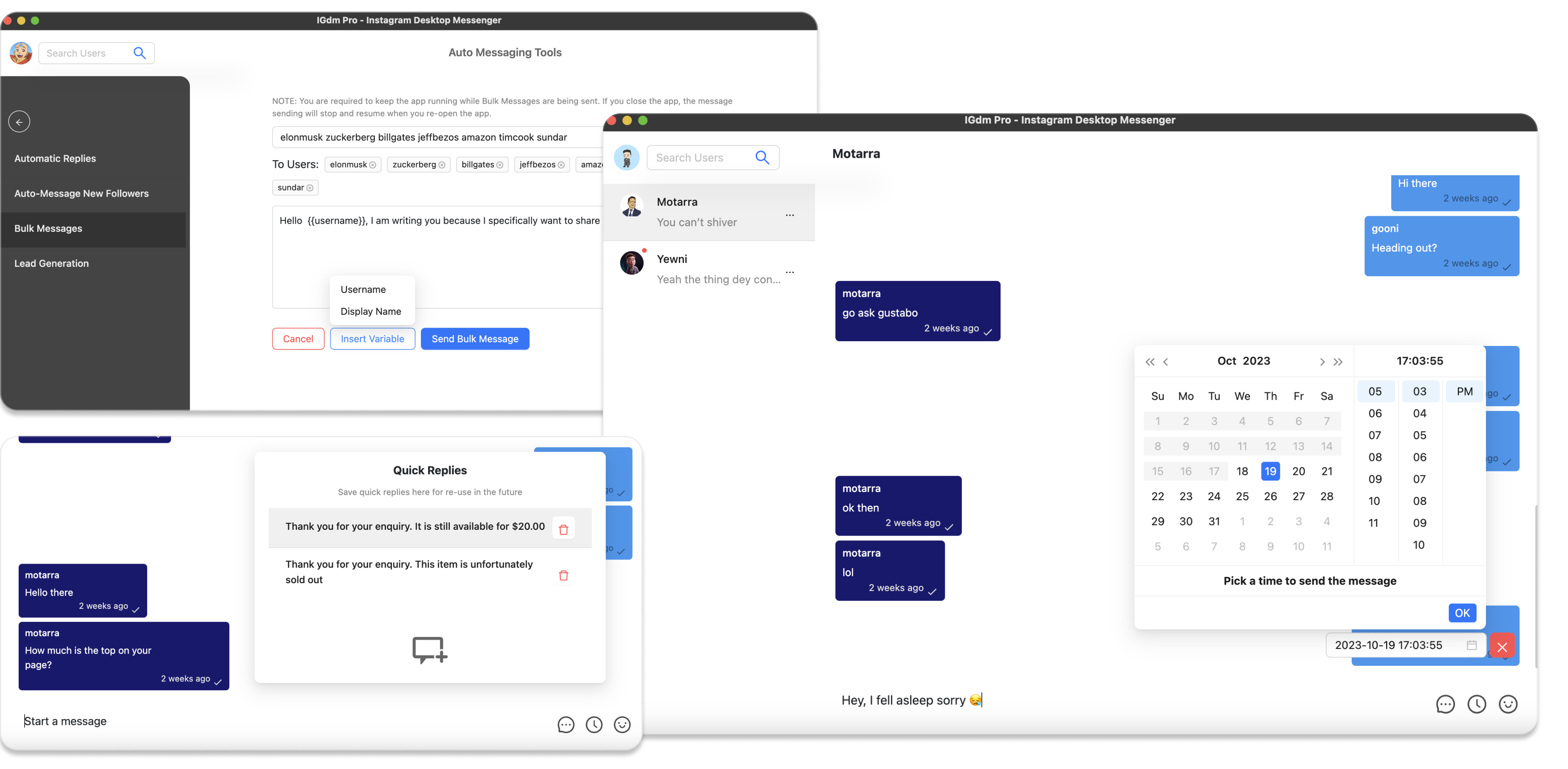
A powerful desktop application like IGdm Pro can help you manage these sensitive interactions with efficiency and professionalism.
How IGdm Pro Helps Manage Negative Comments:
- Comment-to-DM Automation: This is the perfect feature for this workflow. You can set up IGdm Pro's Comment-to-DM Automation to monitor your posts for keywords that often appear in negative comments (e.g., "disappointed," "broken," "issue"). When a comment with one of these keywords is posted, the tool can automatically send a pre-written, personalized DM to that user.
"Hi {{name}}, we saw your comment and we're so sorry to hear you're having an issue. We want to help. Could you please provide us with a few more details here so we can resolve this for you?"
- Quick Replies: For manual responses, you can use the Quick Replies feature to save templates for your standard "We've sent you a DM" public comment, ensuring your responses are fast and consistent.
- Labeled Conversations: Once a negative conversation moves to the DMs, you can use Labeled Conversations to categorize it (e.g.,
Support Ticket,Urgent Issue). This helps your team track and manage the resolution process, ensuring nothing falls through the cracks.
By integrating a tool like IGdm Pro, you can build a scalable and professional workflow for managing negative comments, allowing your team to handle sensitive situations with speed and grace.
Conclusion: Building a Resilient Community
Dealing with trolls and negative comments is an unavoidable part of managing a public Instagram account. However, with a clear and strategic approach, you can protect your brand's reputation, foster a positive community, and even turn criticism into an opportunity to build trust.
Remember to differentiate between trolls and genuine feedback, use Instagram's moderation tools to your advantage, and always aim to resolve legitimate issues with empathy and professionalism. By pairing a solid strategy with powerful tools to streamline your workflow, you can manage negativity with confidence and build a resilient brand that is respected by its community.