How to Generate Instagram Story Ideas for a Month
Keeping your Instagram Stories fresh and engaging every single day can feel like a content-creation treadmill you can’t get off. One moment you’re full of ideas, and the next, you’re staring at your screen, completely blank. What if you could plan an entire month of Story content in advance, ensuring a consistent, engaging, and stress-free presence?
This guide will walk you through a strategic framework to generate a month's worth of Instagram Story ideas. We'll cover everything from understanding your audience to batch-creating content, and even how to manage the engagement that comes with a successful Story strategy.
Table of Contents
- Why You Need a Monthly Plan for Your Instagram Stories
- Step 1: Define Your Goals and Content Pillars
- Step 2: Brainstorming Your Story Ideas
- Step 3: Create a Weekly Story Schedule
- Step 4: Batch-Create Your Content
- Step 5: Manage Engagement with Automation
- 30 Days of Instagram Story Ideas to Get You Started
- Conclusion
Why You Need a Monthly Plan for Your Instagram Stories
Instagram Stories are a powerful tool for building a connection with your audience. Their ephemeral, "in-the-moment" nature fosters a sense of authenticity and urgency. However, posting sporadically or without a clear strategy can lead to inconsistent engagement. A monthly plan helps you:
- Stay Consistent: A regular posting schedule keeps your brand top-of-mind.
- Save Time: Batching your content creation frees up your daily schedule.
- Tell a Cohesive Story: A plan ensures your Stories align with your overall brand narrative and marketing goals.
- Reduce Stress: No more last-minute scrambling for what to post.
Step 1: Define Your Goals and Content Pillars
Before you start brainstorming, you need to know what you want to achieve. Are you looking to:
- Increase brand awareness?
- Drive traffic to your website?
- Generate leads?
- Boost sales of a specific product?
- Build a more engaged community?
Once your goals are clear, define your content pillars. These are 3-5 core themes that your brand will consistently talk about. For example, a fitness brand's pillars might be "Workout Tips," "Healthy Recipes," "Client Success Stories," and "Mindfulness." These pillars will be the foundation of your Story ideas.
Step 2: Brainstorming Your Story Ideas
With your pillars in place, it's time to brainstorm. Grab a notebook or open a document and let the ideas flow. Think about:
- Frequently Asked Questions: What are the common questions you get from your audience?
- Behind-the-Scenes: What does a day in your life or business look like?
- Educational Content: What quick tips or tutorials can you share?
- User-Generated Content (UGC): How can you feature your community?
- Interactive Content: Think polls, quizzes, Q&As, and "This or That" style questions.
Step 3: Create a Weekly Story Schedule
To keep your content varied and engaging, create a template for your weekly Stories. This provides structure and ensures you're hitting all your content pillars.
Example Weekly Schedule:
- Monday (Motivation & Mindset): Share an inspirational quote or a goal-setting tip.
- Tuesday (Tutorials & Tips): Post a quick "how-to" guide related to your niche.
- Wednesday (Community & Q&A): Host a Q&A session using the question sticker or share UGC.
- Thursday (Behind-the-Scenes): Take your audience on a tour of your workspace or show your creative process.
- Friday (Fun & Interactive): Run a poll, a quiz, or a fun "This or That" series.
- Saturday (Promotional): Showcase a product, share a customer testimonial, or announce a special offer.
- Sunday (Recap & Relax): Share a recap of the week or some light-hearted, personal content.
Step 4: Batch-Create Your Content
Now that you have a plan, it's time to create the content. "Batching" is the process of creating multiple pieces of content in one dedicated session.
- Design Templates: Use a tool like Canva to create branded templates for your Stories. This ensures a cohesive look and saves time.
- Shoot Photos and Videos: Dedicate a few hours to shooting all the photos and videos you'll need for the month.
- Write Your Copy: Write out any text overlays or talking points for your videos.
Step 5: Manage Engagement with Automation
A successful Story strategy will lead to more DMs. Managing this influx of messages is crucial for converting interest into leads or sales. This is where a DM automation tool can be a lifesaver.
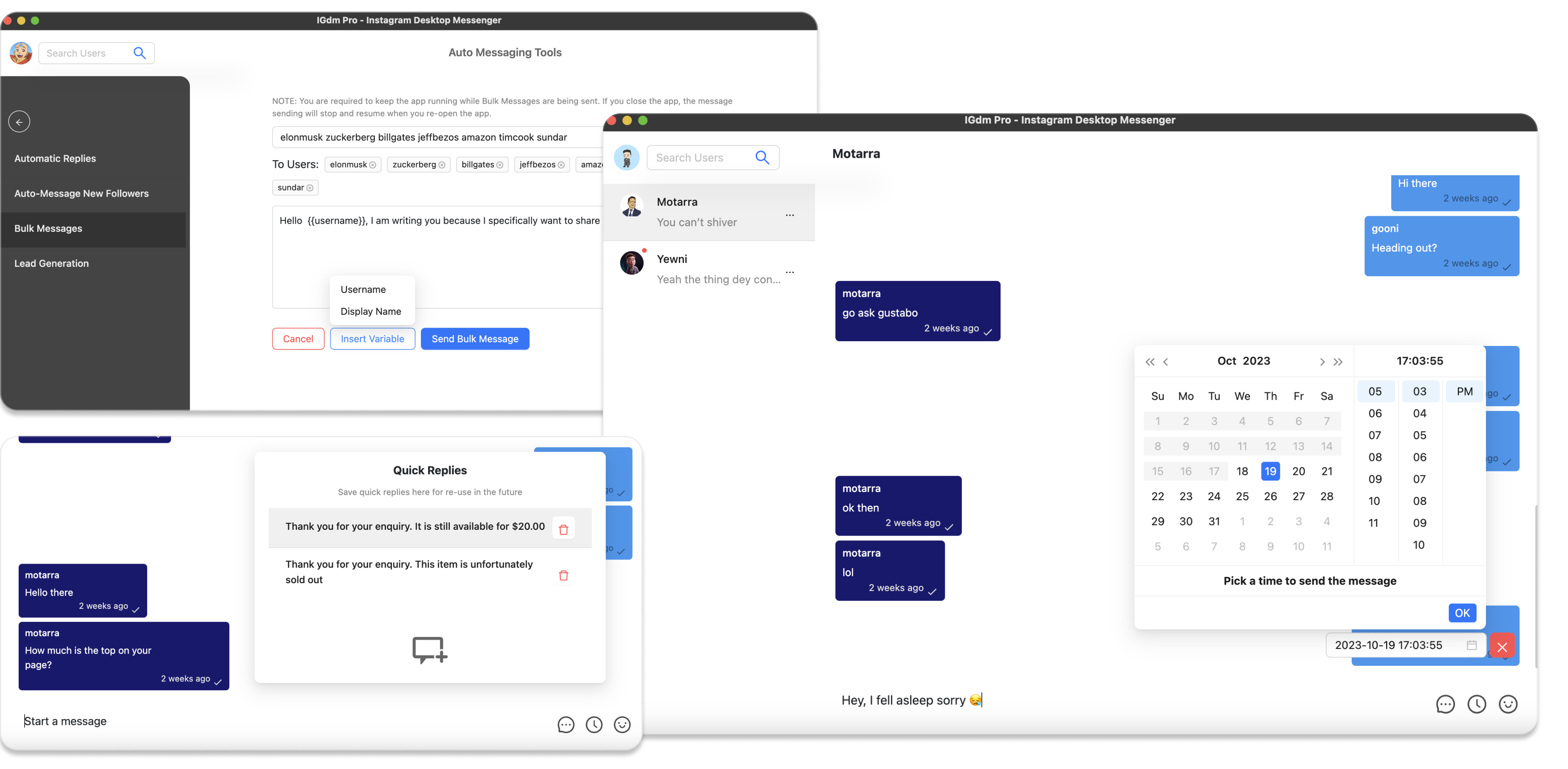
A powerful desktop application like IGdm Pro can help you manage this engagement efficiently. With features designed for businesses and marketers, you can:
- Set Up Auto-Replies: When you run a poll or a Q&A, you can expect a lot of responses. Set up Automatic Replies to instantly acknowledge messages, letting your followers know you've received their input and will get back to them.
- Organize Conversations: Use Labeled Conversations to categorize DMs that come from your Stories (e.g., "Story Lead," "Q&A Question"). This helps you prioritize and track follow-ups.
- Send Bulk Follow-Ups: After a poll, you can send a personalized Bulk Message to everyone who voted a certain way, perhaps with a special offer or more information.
By integrating a tool like IGdm Pro, you can efficiently manage the engagement your Stories generate, ensuring no opportunity is missed.
30 Days of Instagram Story Ideas to Get You Started
Here's a sample 30-day plan based on the weekly schedule above to spark your creativity:
Week 1:
- Mon: Motivational quote about starting the week strong.
- Tue: A 3-slide tutorial on a core skill in your niche.
- Wed: Q&A session: "Ask me anything about [Your Pillar]."
- Thu: A video tour of your workspace.
- Fri: Poll: "Coffee or Tea to start the day?"
- Sat: Showcase your best-selling product in action.
- Sun: Share a book you're reading or a favorite weekend spot.
Week 2: 8. Mon: Share a client's success story. 9. Tue: A quick tip that solves a common problem for your audience. 10. Wed: Share a piece of user-generated content. 11. Thu: "A day in the life" Reel, shared to your Story. 12. Fri: Quiz: Test your audience's knowledge about your industry. 13. Sat: Announce a limited-time offer with a countdown sticker. 14. Sun: Share a personal hobby or interest.
Week 3: 15. Mon: A post about overcoming a challenge. 16. Tue: A carousel of "Top 5 resources for [Your Niche]." 17. Wed: "This or That" poll related to your products or services. 18. Thu: Behind-the-scenes of your content creation process. 19. Fri: Use the question sticker to ask for content suggestions. 20. Sat: Share a glowing customer review. 21. Sun: A relaxing Sunday scene (your view, your pet, etc.).
Week 4 & 5: 22. Mon: A quote from an industry leader you admire. 23. Tue: A myth-busting post about your industry. 24. Wed: Go live for a Q&A and share the replay to your Story. 25. Thu: Introduce a team member. 26. Fri: A fun GIF or meme related to your niche. 27. Sat: A "Last Chance" reminder for your weekly offer. 28. Sun: Share your goals for the upcoming week. 29. Mon: A final motivational push for the month. 30. Tue: A recap of your most popular tips from the month.
Conclusion
Planning a month's worth of Instagram Story ideas doesn't have to be a daunting task. With a clear strategy, a structured schedule, and the right tools, you can create a consistent and engaging presence that captivates your audience.
Remember to be authentic, provide value, and have fun with it. And when the engagement starts pouring in, be ready to manage it effectively to build a strong and loyal community.