How to Manage Instagram Content Rights and Permissions
Instagram is a visual goldmine, powered by a constant stream of stunning content from creators, brands, and everyday users. It's incredibly tempting to repost a beautiful image that fits your brand's aesthetic. But doing so without the proper permissions isn't just bad etiquette—it can land you in serious legal trouble. Understanding how to manage content rights and permissions is essential for building a professional, reputable, and sustainable brand on the platform.
This guide will walk you through the essentials of Instagram content rights, from using user-generated content (UGC) legally to protecting your own work from theft.
Table of Contents
- The Basics of Copyright on Instagram
- Using Other People's Content (UGC): The Right Way
- Working with Influencers: Clear Agreements are Key
- Streamlining Your Workflow with DM Management Tools
- What to Do When Your Content is Used Without Permission
- Conclusion: Professionalism and Respect Go a Long Way
The Basics of Copyright on Instagram
The moment someone creates an original piece of content—whether it's a photo, video, or graphic—they own the copyright to it. This is true even if they don't have a registered copyright. When a user posts content on Instagram, they are granting Instagram a license to use and distribute that content on its platform, but they are not transferring ownership to Instagram or giving other users the right to reuse it.
According to Instagram's Terms of Use, you can't post content that infringes on someone else's intellectual property rights. In short: if you didn't create it, you need permission to post it.
Using Other People's Content (UGC): The Right Way
User-Generated Content is incredibly valuable. It provides authentic social proof and builds a strong sense of community. However, there's a right way and a wrong way to use it.
- The Wrong Way: Simply reposting a photo and "giving credit" by tagging the creator in the caption or photo is not enough. A tag is not legal consent.
- The Right Way: Always ask for explicit permission before reposting someone's content.
How to Ask for Permission
The best way to ask for permission is with a clear and polite Direct Message (DM). Your message should specify:
- What content you want to use.
- Where you want to use it (e.g., on your Instagram feed, in Stories, on your website).
- How you will credit them.
For example:
"Hi [Creator's Name]! We absolutely love your photo of [describe photo]. We'd be thrilled to feature it on our Instagram feed with full credit to you. Would that be okay with you?"
Wait for their explicit consent (a "yes" is sufficient) before you post. This written confirmation, even in a DM, serves as a record of your agreement.
Working with Influencers: Clear Agreements are Key
When you're paying an influencer for content, the rules are different, but the need for clarity is even greater. A formal contract is essential. Your influencer agreement should clearly define:
- Deliverables: The exact number and type of posts, Stories, or Reels.
- Content Ownership: Who owns the content after it's created? Typically, the creator retains ownership, but the brand licenses it.
- Usage Rights: This is the most important part. Be specific about how and where you can use the content. Can you use it on your website? In paid ads? On social media? For how long?
- Exclusivity: Is the influencer prohibited from working with competitors for a certain period?
Never rely on verbal agreements. A clear contract protects both you and the creator and prevents future misunderstandings.
Streamlining Your Workflow with DM Management Tools
As you can see, the Instagram DM inbox is the central hub for managing content permissions. Whether you're reaching out to a user for UGC rights or negotiating with an influencer, these conversations all happen in DMs. As your brand grows, this can become incredibly chaotic.
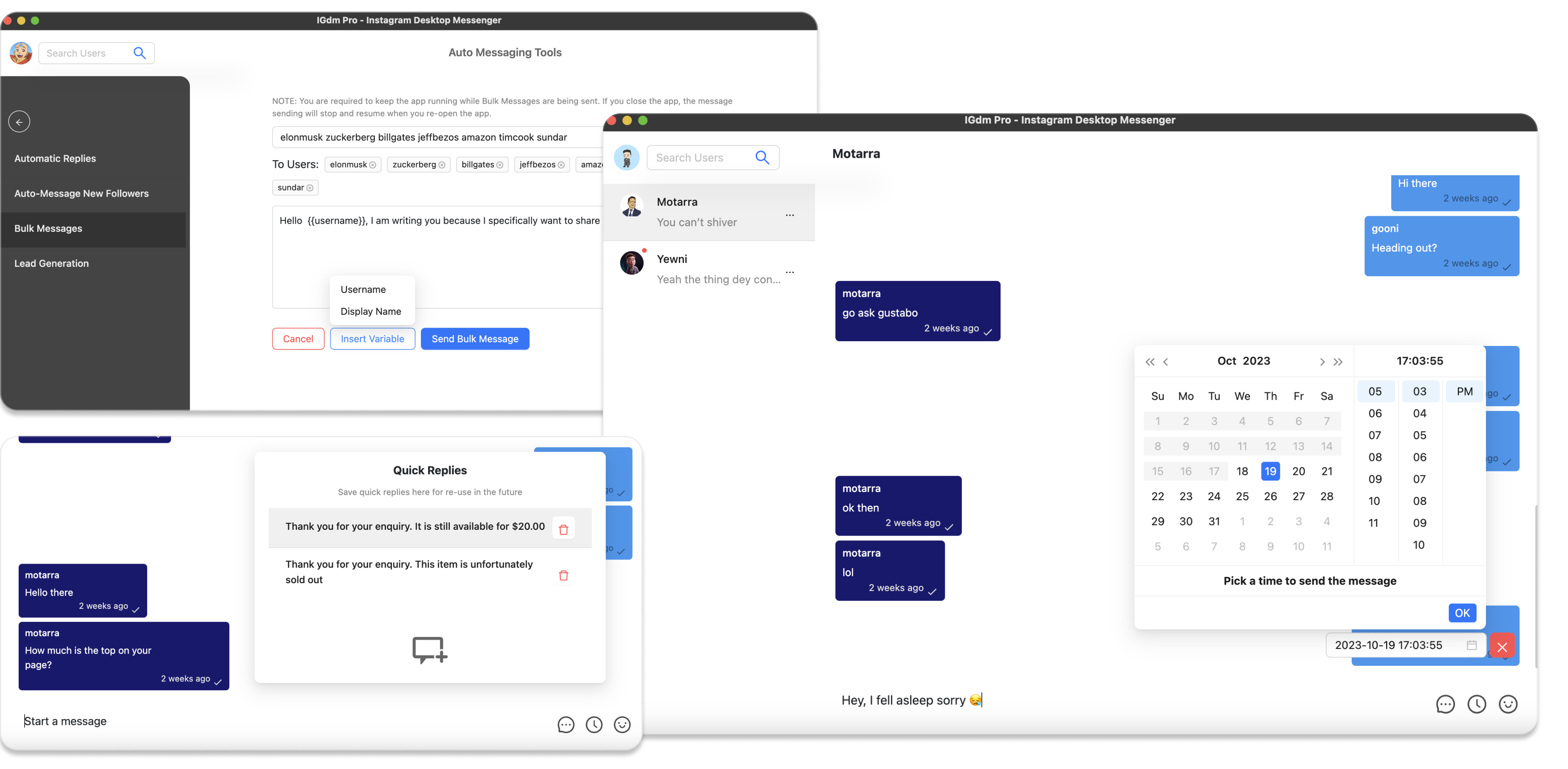
This is where a desktop DM management tool like IGdm Pro becomes essential for creators, agencies, and brand managers. It provides a professional workflow to handle these communications with efficiency and organization.
With IGdm Pro, you can:
- Organize Conversations with Labels: Use the Labeled Conversations feature to track the status of your permission requests. Create labels like
Permission Requested,Permission Granted, orUsage Fee Paidto see your entire pipeline at a glance. - Use Templates for Outreach: Save your permission request messages as Quick Replies. This allows you to send professional, standardized requests in a single click, saving time and ensuring consistency.
- Never Miss a Follow-Up: Set Message Reminders on your outreach DMs. If a creator or brand hasn't responded to your request, you'll get a notification to follow up, ensuring no opportunity is missed.
By moving your permission management to an organized desktop environment, you present a more professional image and can handle a higher volume of collaborations and UGC requests without getting overwhelmed.
What to Do When Your Content is Used Without Permission
If you find that another account has reposted your content without your consent, here's a step-by-step plan:
- Send a Polite DM: The first step should always be a calm and professional message. Often, the user may not have known the rules and will be happy to take the content down.
- File a Copyright Report: If they don't respond or refuse to remove the content, you can file an official copyright report with Instagram through their Copyright Report Form.
- Seek Legal Advice: For persistent or commercial infringement, it may be necessary to consult with a lawyer who specializes in intellectual property.
Conclusion: Professionalism and Respect Go a Long Way
Managing content rights on Instagram is all about professionalism and respect. By always asking for permission, getting clear agreements in writing, and protecting your own work, you build a brand that is trustworthy and reputable.
While it may seem like an extra step, a proper content rights management strategy is a non-negotiable part of a successful and sustainable Instagram presence. It protects you legally, builds good will with other creators, and ultimately strengthens your brand's integrity.