How to Create Instagram UGC Campaigns for Clients
User-Generated Content (UGC) is the secret sauce to building an authentic and engaged community on Instagram. For marketing agencies and social media managers, a well-executed UGC campaign can be a game-changer for clients, transforming their followers from passive viewers into active brand advocates. This guide will walk you through the essential steps to create and manage a successful Instagram UGC campaign that delivers real results.
Table of Contents
- What is a UGC Campaign and Why is it a Win for Your Clients?
- Step 1: Define Clear Campaign Goals
- Step 2: Design the Campaign Mechanics
- Step 3: Promote the Campaign Like a Pro
- Step 4: Engage with Participants and Manage Submissions
- Step 5: Curate and Showcase the Best UGC
- Step 6: Measure the Campaign's Success
- Conclusion
What is a UGC Campaign and Why is it a Win for Your Clients?
A User-Generated Content (UGC) campaign is a marketing initiative that encourages a brand's audience to create and share content related to the brand. This could be anything from photos and videos to reviews and testimonials.
For your clients, UGC campaigns are a win-win-win:
- Authenticity and Social Proof: Content from real customers is perceived as more trustworthy and authentic than branded content. It’s the digital equivalent of word-of-mouth marketing.
- Increased Engagement and Community Building: UGC campaigns foster a sense of community and encourage interaction, strengthening the bond between the brand and its followers.
- Cost-Effective Content Source: It provides a steady stream of high-quality, creative content that you can repurpose across your client's marketing channels, saving time and resources.
Step 1: Define Clear Campaign Goals
Before you launch, you need to know what you want to achieve. Your client's goals will shape the entire campaign. Common objectives for a UGC campaign include:
- Increasing Brand Awareness: Getting the brand in front of a new audience.
- Boosting Engagement: Increasing likes, comments, shares, and overall interaction.
- Generating Content: Building a library of authentic content for future use.
- Driving Sales: Directly promoting a product and encouraging purchases.
Step 2: Design the Campaign Mechanics
With your goals defined, it's time to design the campaign.
- Choose a Campaign Type:
- Hashtag Contest: The most common type. Ask users to post content with a unique, branded hashtag (e.g.,
#MyClientBrandStory). - Photo/Video Challenge: Encourage users to get creative around a specific theme.
- "Tag a Friend" Giveaway: A simple way to boost reach and engagement.
- Hashtag Contest: The most common type. Ask users to post content with a unique, branded hashtag (e.g.,
- Set Clear Rules and Guidelines: Make it easy for people to participate. Clearly outline how to enter, the type of content to submit, and the campaign deadline.
- Offer an Appealing Prize: The prize should be valuable and relevant to your client's brand. It could be a product bundle, a gift card, or even a feature on the brand's profile.
Step 3: Promote the Campaign Like a Pro
A great campaign is useless if no one knows about it. Promote your UGC campaign across all of your client's channels.
- Instagram Feed, Stories, and Reels: Create a series of posts and videos to announce the campaign and remind followers to participate.
- Use the Countdown Sticker: The countdown sticker in Stories is a great way to build anticipation for the launch or deadline.
- Cross-Promote: Share the campaign on other social media platforms and in your client's email newsletter.
Step 4: Engage with Participants and Manage Submissions
This is where community management becomes crucial. As submissions start rolling in, it's important to engage with participants to keep the momentum going.
- Acknowledge Every Entry: Like and comment on every submission to make participants feel seen and appreciated.
- Feature Entries in Stories: Share some of the best entries in your client's Stories throughout the campaign.
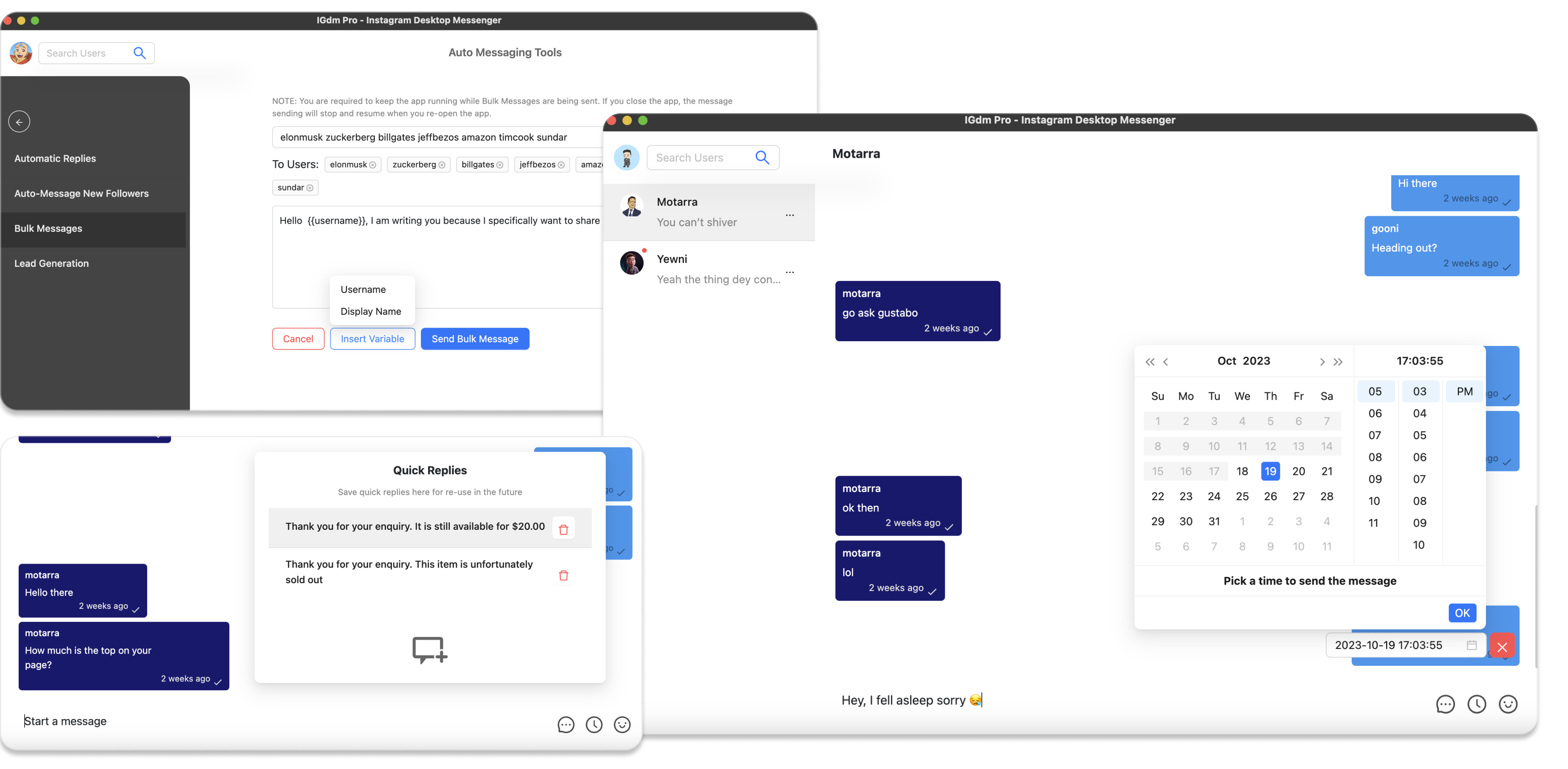
A successful UGC campaign can also lead to a significant increase in Direct Messages (DMs) with questions about the rules, prize, or submissions. Managing this influx of communication efficiently is key. This is where a powerful DM management tool like IGdm Pro can be a lifesaver for your agency.
With IGdm Pro, you can:
- Set Up Auto-Replies: Instantly answer frequently asked questions about the campaign with keyword-based auto-replies.
- Organize Conversations: Use Labeled Conversations to categorize DMs related to the campaign (e.g., "UGC Question," "UGC Submission"), so your team can easily track and respond.
- Send Bulk Messages: Use the Bulk Messaging feature to send a personalized thank-you message to all participants after the campaign ends.
By streamlining your DM workflow, you can provide a better experience for participants and manage the campaign more effectively.
Step 5: Curate and Showcase the Best UGC
Once the campaign is over, it's time to showcase the amazing content your client's audience has created.
- Get Permission: Always ask for permission before reposting a user's content on your client's feed or other marketing materials. A simple DM is usually sufficient.
- Credit the Creator: When you repost, always give credit to the original creator by tagging them in the photo and mentioning them in the caption.
- Create a UGC Highlight: Create a dedicated Instagram Highlight on your client's profile to permanently showcase the best UGC from the campaign.
Step 6: Measure the Campaign's Success
Track your performance against the goals you set in Step 1. Key metrics to report to your client include:
- Number of Submissions: The total amount of UGC generated.
- Engagement Rate: The likes, comments, shares, and saves on campaign-related posts.
- Reach and Impressions: How many people saw your campaign.
- Hashtag Usage: How many times the campaign hashtag was used.
- Follower Growth: The number of new followers gained during the campaign.
Conclusion
A well-planned Instagram UGC campaign can be a powerful tool for building an authentic, engaged community for your clients. By setting clear goals, designing a compelling campaign, and engaging with participants, you can generate valuable social proof and a library of content that will serve your client's brand long after the campaign is over.
And by leveraging smart tools to manage the administrative side of the campaign, you can focus on what you do best: delivering creative, impactful marketing that drives real results.