How to Track Instagram Influencer Campaign Performance
Table of Contents
- Introduction
- Why Tracking Influencer Campaign Performance is Crucial
- Setting Clear Goals and KPIs
- Key Metrics to Track
- Tools and Methods for Tracking Performance
- Leveraging IGdm Pro for Campaign Management
- Analyzing the Data and Reporting ROI
- Conclusion
Introduction
So, you've launched an Instagram influencer campaign. The content is beautiful, the influencer is a perfect fit for your brand, and the posts are live. But how do you know if it's actually working? Tracking the performance of your influencer campaigns is not just about seeing pretty pictures; it's about understanding the real impact on your business goals. This guide will walk you through how to effectively track your Instagram influencer campaign performance, measure your return on investment (ROI), and use that data to build even better campaigns in the future.
Why Tracking Influencer Campaign Performance is Crucial
Tracking your campaign's performance is essential for several reasons:
- Measure ROI: It allows you to determine if your investment in the campaign is paying off.
- Optimize Future Campaigns: By understanding what works (and what doesn't), you can refine your strategy for future collaborations.
- Identify Top-Performing Influencers: Data helps you identify which influencers are driving the best results, so you know who to partner with again.
- Justify Marketing Spend: Clear metrics allow you to demonstrate the value of influencer marketing to stakeholders.
Setting Clear Goals and KPIs
Before you can track performance, you need to know what you're measuring against. Your campaign goals should be clearly defined from the start. Common goals include:
- Brand Awareness: Reaching a new audience.
- Engagement: Increasing likes, comments, shares, and saves.
- Website Traffic: Driving users to your website or a specific landing page.
- Sales and Conversions: Directly generating sales or leads.
For each goal, define your Key Performance Indicators (KPIs). For example, if your goal is brand awareness, your KPIs would be reach and impressions. If it's sales, your primary KPI would be the conversion rate.
Key Metrics to Track
Reach and Impressions
- Reach: The number of unique accounts that saw the influencer's post.
- Impressions: The total number of times the post was seen. These metrics are your go-to for measuring brand awareness.
Engagement Rate
This is a measure of how much the audience interacted with the content. It's calculated as: (Likes + Comments + Shares + Saves) / Followers. A high engagement rate indicates that the content is resonating with the audience.
Website Traffic and Clicks
If your goal is to drive traffic, you need to track how many users are clicking through to your website.
- Link Clicks: The number of clicks on the link in the influencer's bio or Story.
Conversions and Sales
This is the ultimate measure of ROI for many campaigns.
- Conversion Rate: The percentage of users who take a desired action (e.g., make a purchase, sign up for a newsletter).
- Sales: The total revenue generated from the campaign.
Audience Growth
Track how many new followers your brand's Instagram account gains during the campaign period.
Tools and Methods for Tracking Performance
UTM Parameters
UTM (Urchin Tracking Module) parameters are snippets of text added to the end of a URL to track where website traffic is coming from. Create a unique UTM link for each influencer so you can track the exact number of clicks and conversions they drive in Google Analytics.
Promo Codes and Affiliate Links
Assign a unique discount code to each influencer. This is one of the easiest ways to track direct sales from their promotion. Affiliate links work similarly, tracking sales and often providing the influencer with a commission.
Instagram Insights
Ask the influencer to share screenshots of their Instagram Insights for the sponsored posts. This will give you access to data like reach, impressions, and saves.
Landing Pages
Create a dedicated landing page for your campaign. This makes it easy to track traffic and conversions coming specifically from your influencer collaboration.
Leveraging IGdm Pro for Campaign Management
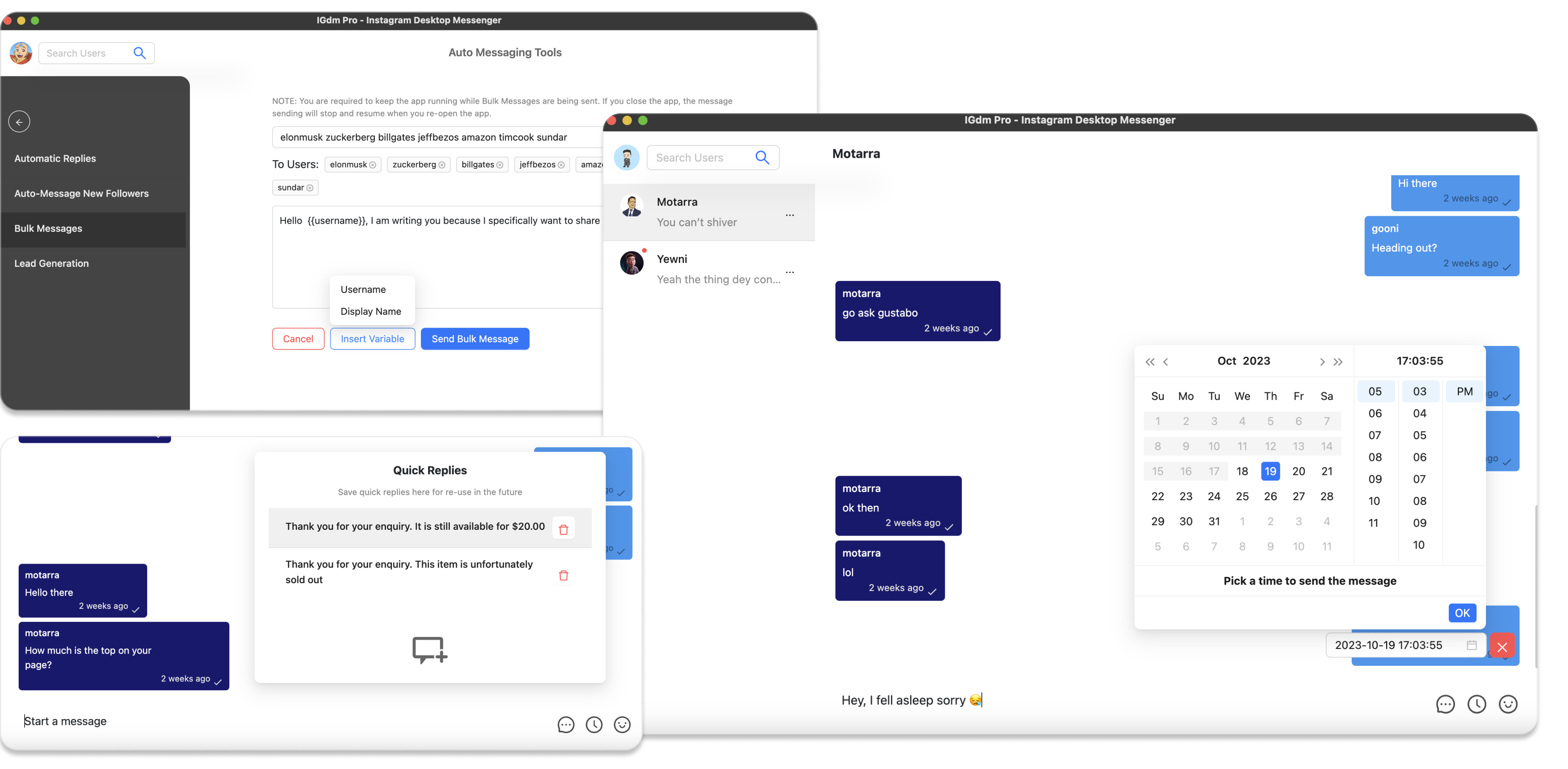
Managing communications and tracking engagement with multiple influencers can be a challenge. A powerful DM management tool like IGdm Pro can streamline this process.
With IGdm Pro, you can:
- Organize Influencer Communications: Use Labeled Conversations to keep all your communications with different influencers organized. You can create labels like
Campaign Outreach,Negotiating, andCampaign Liveto track the status of each partnership. - Automate Outreach: Use Bulk Messaging to send personalized outreach messages to a list of potential influencers, saving you hours of manual work.
- Track Engagement from DMs: If your campaign's call-to-action is to "DM for more info," IGdm Pro's Auto-Replies can handle the initial influx of messages, and you can use labels to track how many leads were generated from each influencer's post.
- Monitor Follower Growth: Use the Lead Generation features to extract lists of new followers during the campaign period to measure audience growth.
By integrating a tool like IGdm Pro, you can manage your influencer campaigns with a higher level of organization and efficiency, allowing you to focus on strategy and relationship building.
Analyzing the Data and Reporting ROI
Once the campaign is over, it's time to analyze the data and calculate your ROI.
- Compile the Data: Gather all the metrics from Instagram Insights, Google Analytics, and your sales platform.
- Calculate ROI: A simple formula for ROI is:
(Profit - Investment) / Investment * 100. - Create a Comprehensive Report: Present your findings in a clear and concise report. Include key wins, learnings, and recommendations for future campaigns.
Conclusion
Tracking the performance of your Instagram influencer campaigns is essential for understanding your ROI and optimizing your marketing strategy. By setting clear goals, tracking the right metrics, and using the right tools, you can turn your influencer collaborations into a predictable and scalable engine for growth.
Remember to leverage powerful DM management tools to streamline your workflow and nurture the relationships you build with both influencers and their audiences. With a data-driven approach, you can ensure that every influencer campaign you run is a strategic investment in your brand's success.