How to Track Instagram Ad Conversions Accurately
Running Instagram ads without accurately tracking conversions is like driving with your eyes closed. You're spending money, but you have no real idea if you're heading in the right direction. Accurate conversion tracking is the key to understanding your return on investment (ROI), optimizing your campaigns, and turning your ad spend into predictable business growth.
This guide will provide a comprehensive, step-by-step approach to tracking your Instagram ad conversions with precision. We'll cover the essential tools, strategies, and analysis techniques to ensure you have a clear view of what's working and why.
Table of Contents
- Why Accurate Conversion Tracking is Non-Negotiable
- The Foundation: Setting Up Your Tracking Tools
- Defining Your Conversion Events
- A Step-by-Step Guide to Setting Up Conversion Tracking
- The Overlooked Goldmine: Tracking Conversions from DMs
- Analyzing Your Conversion Data in Ads Manager
- Conclusion: From Clicks to Conversions
Why Accurate Conversion Tracking is Non-Negotiable
Without accurate tracking, you can't:
- Calculate Your True ROI: You won't know if your ads are actually making money.
- Optimize Your Campaigns: You can't improve what you don't measure. Tracking allows you to identify your best-performing ads, audiences, and creatives.
- Scale Effectively: You can't confidently increase your ad spend if you don't know what's driving results.
Accurate tracking turns your advertising from a cost into an investment.
The Foundation: Setting Up Your Tracking Tools
To track actions that happen on your website (like a purchase or a form submission), you need to set up Meta's tracking tools.
The Meta Pixel
The Meta Pixel is a small piece of code that you install on your website. It tracks visitor activity and sends this data back to Meta Ads Manager. This allows you to measure conversions, build retargeting audiences, and optimize your ads for specific actions.
The Conversions API
With the increasing prevalence of ad blockers and privacy changes like Apple's iOS 14 update, the Pixel can sometimes be unreliable. The Conversions API is a more robust solution that allows your server to send conversion data directly to Meta's servers, bypassing the browser. Using both the Pixel and the Conversions API together is the best practice for the most accurate tracking.
Defining Your Conversion Events
A "conversion" is any valuable action a user takes on your website. You need to define what these actions are. Common conversion events include:
- Purchase: A completed transaction.
- Lead: A user submitting a form.
- Add to Cart: A user adding a product to their shopping cart.
- Initiate Checkout: A user starting the checkout process.
- View Content: A user viewing a key page, like a product page or a blog post.
A Step-by-Step Guide to Setting Up Conversion Tracking
- Install the Meta Pixel: In Meta Events Manager, create a Pixel and follow the instructions to install it on your website. If you use a platform like Shopify or WooCommerce, there are often simple integrations.
- Set Up the Conversions API: This is a more technical step, but many e-commerce platforms now offer partner integrations that make it easier.
- Configure Your Events: Use the Events Manager tool to set up and test your standard conversion events (Purchase, Add to Cart, etc.).
- Prioritize Your Events (for iOS 14+): Due to Apple's privacy changes, you can only track a maximum of 8 conversion events. You'll need to prioritize them in order of importance in the Events Manager.
The Overlooked Goldmine: Tracking Conversions from DMs
Not all conversions happen on a website. For many businesses, especially service providers and high-ticket sellers, the most valuable conversions happen in the Direct Message (DM) inbox. A "Send Message" ad campaign can generate a high volume of leads, but how do you track which of those conversations turn into sales?
This is where a professional DM management workflow becomes a crucial part of your tracking strategy. While you can't automatically link a DM conversation to a final sale in Ads Manager, you can create a system to track it manually and effectively.
A Workflow for Tracking DM Conversions
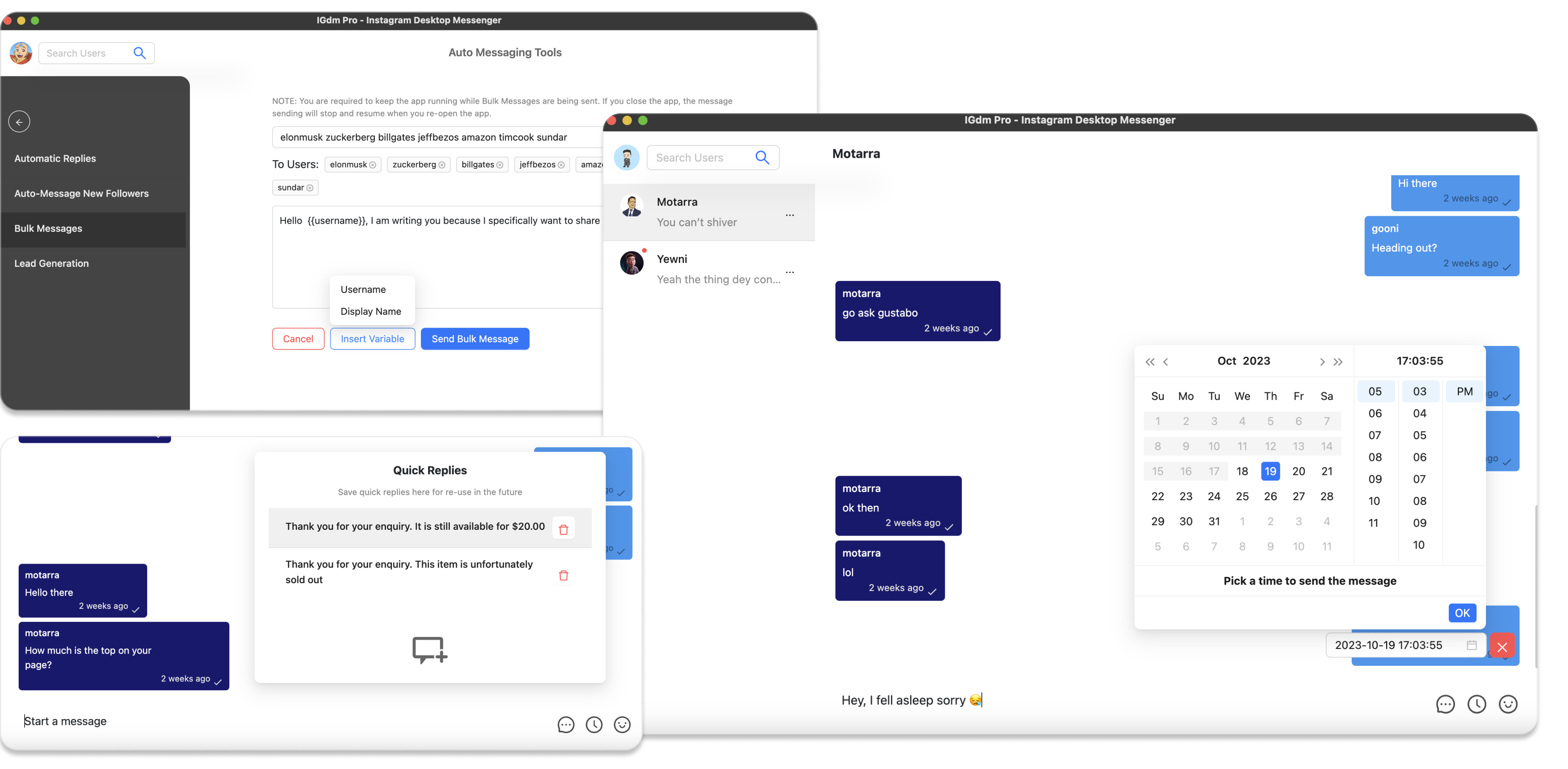
This is where a powerful desktop tool like IGdm Pro becomes essential. It allows you to build a systematic process for managing and tracking leads that come through your DMs.
- Label Incoming Leads: When a user messages you from an ad, use IGdm Pro's Labeled Conversations feature to immediately tag the conversation. Create labels that align with your ad campaigns (e.g.,
Ad Lead - Campaign A,Ad Lead - Campaign B). - Qualify and Nurture: Use features like Quick Replies to answer common questions and qualify the lead efficiently.
- Track the Conversion: When a sale is made, you can either change the conversation label to
Convertedor add a note to the conversation. - Analyze and Report: At the end of your reporting period, you can filter your inbox by the
Convertedlabel and manually tally the number of sales generated from each ad campaign.
By using a tool like IGdm Pro, you can transform your messy DM inbox into an organized, trackable sales funnel, giving you the data you need to calculate the true ROI of your "Send Message" campaigns.
Analyzing Your Conversion Data in Ads Manager
Once your tracking is set up, you can see your conversion data directly in your Ads Manager dashboard.
- Customize Your Columns: Add columns for your key conversion events (e.g., "Purchases," "Cost per Purchase," "Purchase ROAS").
- Look at the Funnel: Analyze the entire conversion funnel. How many users who added to cart also initiated checkout? Where are they dropping off?
- Analyze Breakdowns: Use the "Breakdown" feature to see which demographics (age, gender), placements (Feed, Stories), or devices are converting best.
Conclusion: From Clicks to Conversions
Accurate conversion tracking is the cornerstone of profitable Instagram advertising. It removes the guesswork and empowers you to make data-driven decisions that improve your ROI. By setting up your tracking tools correctly, defining your key conversion events, and analyzing the data, you can build a powerful advertising machine.
And don't forget the conversations happening in your DMs. For many businesses, this is where the most valuable conversions occur. By implementing a structured workflow to manage and track these leads, you can gain a complete picture of your campaign's performance and unlock a new level of growth for your business.