How to Set Up Instagram Shopping for E-commerce Clients
Instagram has evolved from a simple photo-sharing app into a powerful e-commerce platform. For agencies and social media managers, setting up Instagram Shopping for clients is no longer just a value-add; it's a necessity for driving sales and creating a seamless customer experience. This guide will walk you through the entire process, from meeting the initial requirements to effectively tagging products and managing customer inquiries.
Table of Contents
- Why Instagram Shopping is a Game-Changer
- The Essential Prerequisites
- A Step-by-Step Guide to Setting Up Instagram Shopping
- Best Practices for Tagging Products
- Managing Customer Inquiries with DM Automation
- Conclusion
Why Instagram Shopping is a Game-Changer
Instagram Shopping transforms your client's profile into an immersive storefront. It allows you to tag products directly in your posts and Stories, creating a seamless path from discovery to purchase. The benefits are clear:
- Reduced Friction: Customers can go from inspiration to purchase in just a few taps, without ever leaving the app.
- Increased Sales: By making it easier to shop, you can significantly boost your client's conversion rates.
- Enhanced Product Discovery: Your products can be featured on the Instagram Shop tab, exposing them to a wider audience of potential customers.
The Essential Prerequisites
Before you can set up Instagram Shopping, you need to ensure your client's account meets the following criteria:
- Eligible Products: The business must sell physical, eligible products that comply with Instagram's commerce policies.
- Supported Country: The business must be located in a country where Instagram Shopping is available.
- Business or Creator Account: The Instagram account must be a Business or Creator account.
- Connected Facebook Page: The Instagram account must be connected to a Facebook Page.
- Domain Ownership: The business must own the website domain from which it sells its products.
A Step-by-Step Guide to Setting Up Instagram Shopping
Step 1: Convert to a Business or Creator Account
If your client's account is still a personal profile, the first step is to switch it to a Business or Creator account. This can be done in the account settings and unlocks access to essential tools like Instagram Insights and Shopping features.
Step 2: Connect Your Facebook Page
Your client's Instagram Business account must be connected to a Facebook Page. This is managed through Instagram's settings under Edit Profile > Page.
Step 3: Upload Your Product Catalog
This is the most crucial step. Your product catalog is the foundation of your Instagram Shop. You have two main options for creating and managing it:
- Commerce Manager: Use Facebook's Commerce Manager to manually create a catalog. This is a good option for businesses with a smaller number of products.
- E-commerce Platform Integration: For a more scalable solution, connect a supported e-commerce platform like Shopify or BigCommerce. This will automatically sync your client's product inventory with their Facebook catalog.
Step 4: Submit Your Account for Review
Once your product catalog is connected, you need to submit your account for review.
- Go to
Settings > Business > Set Up Instagram Shopping. - Follow the steps to submit your account.
- The review process can take a few days. You can check the status in your settings.
Step 5: Turn on Shopping Features
Once your account is approved, you'll receive a notification. Now you can turn on the Shopping features:
- Go to
Settings > Business > Shopping. - Select the product catalog you want to connect to your account.
- Tap "Done."
Best Practices for Tagging Products
With Instagram Shopping enabled, you can start tagging products in your posts and Stories.
- Tag in Feed Posts: You can tag up to five products per single-image post or 20 products per carousel post.
- Use Product Stickers in Stories: The "Product" sticker allows you to tag one product per Story.
- Curate a Shopping Collection: Create collections in your Shop to group products by theme (e.g., "New Arrivals," "Summer Essentials").
Managing Customer Inquiries with DM Automation
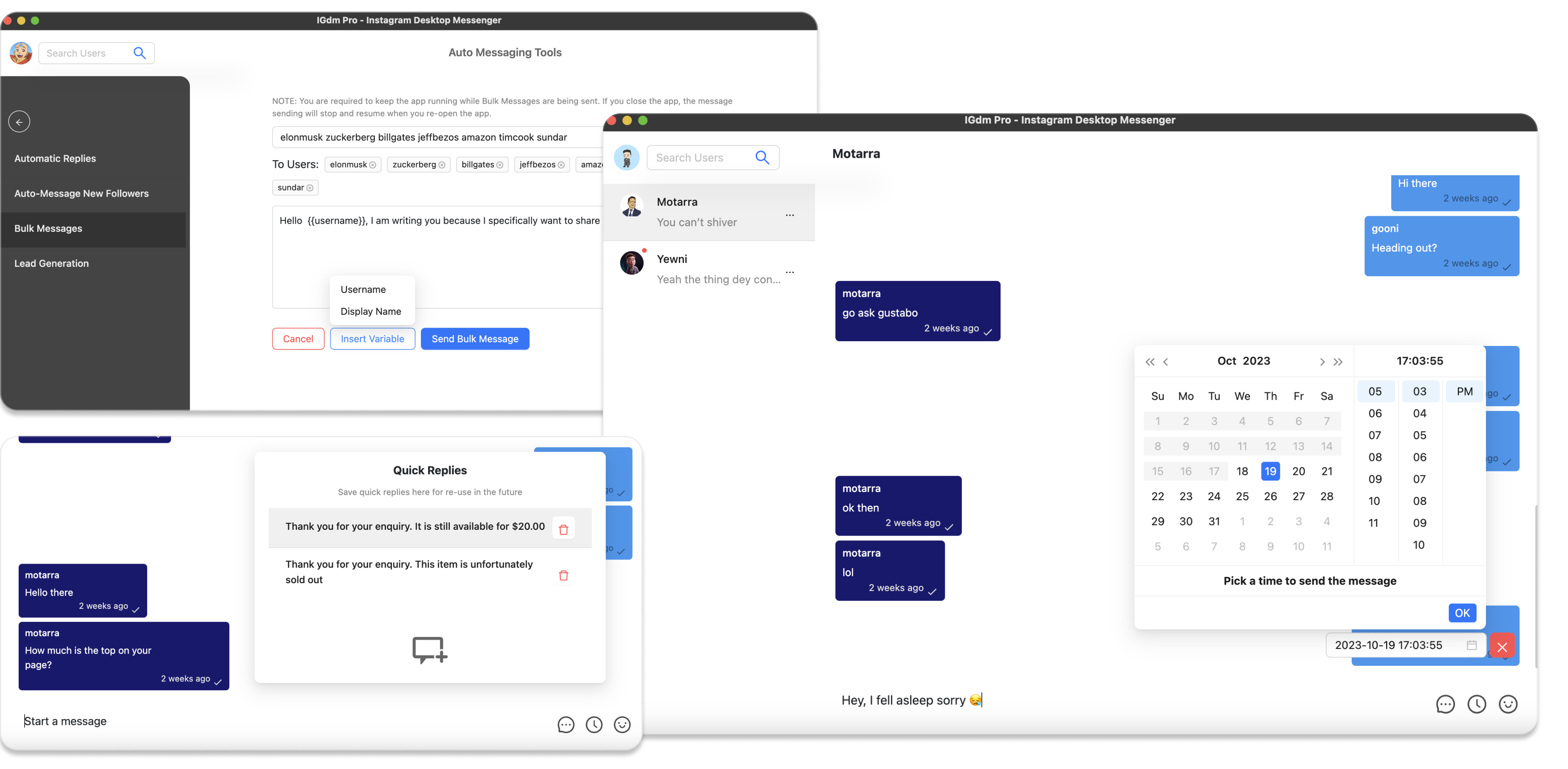
A successful Instagram Shop will inevitably lead to an increase in Direct Messages from customers with questions about products, shipping, and returns. Managing this influx of DMs efficiently is key to providing excellent customer service and closing sales. This is where a powerful DM automation tool like IGdm Pro can be a game-changer for your agency.
With IGdm Pro, you can:
- Set Up Auto-Replies: Instantly answer frequently asked questions about your client's products. For example, you can create an auto-reply for the keyword "shipping" that provides a link to the shipping policy.
- Automate Welcome Messages: Greet new followers who may have discovered the account through the Shop tab, and introduce them to the brand.
- Organize Conversations with Labels: Keep your client's inbox tidy by labeling conversations as "Sales Lead," "Support Question," or "Return Request." This ensures your team can prioritize and respond efficiently.
- Use Message Reminders: Set reminders to follow up with potential customers who showed interest but didn't purchase, helping you to nurture leads and close more sales.
By integrating a tool like IGdm Pro into your workflow, you can offer a more comprehensive and efficient management service to your e-commerce clients, handling both their content and their customer communications with professionalism and scale.
Conclusion
Setting up Instagram Shopping is a powerful way to turn your client's Instagram profile into a significant sales channel. By following these steps and best practices, you can create a seamless shopping experience for their customers. And by pairing your strategy with smart automation tools to manage the resulting engagement, you can provide a top-tier service that drives real results and demonstrates your value as a marketing partner.